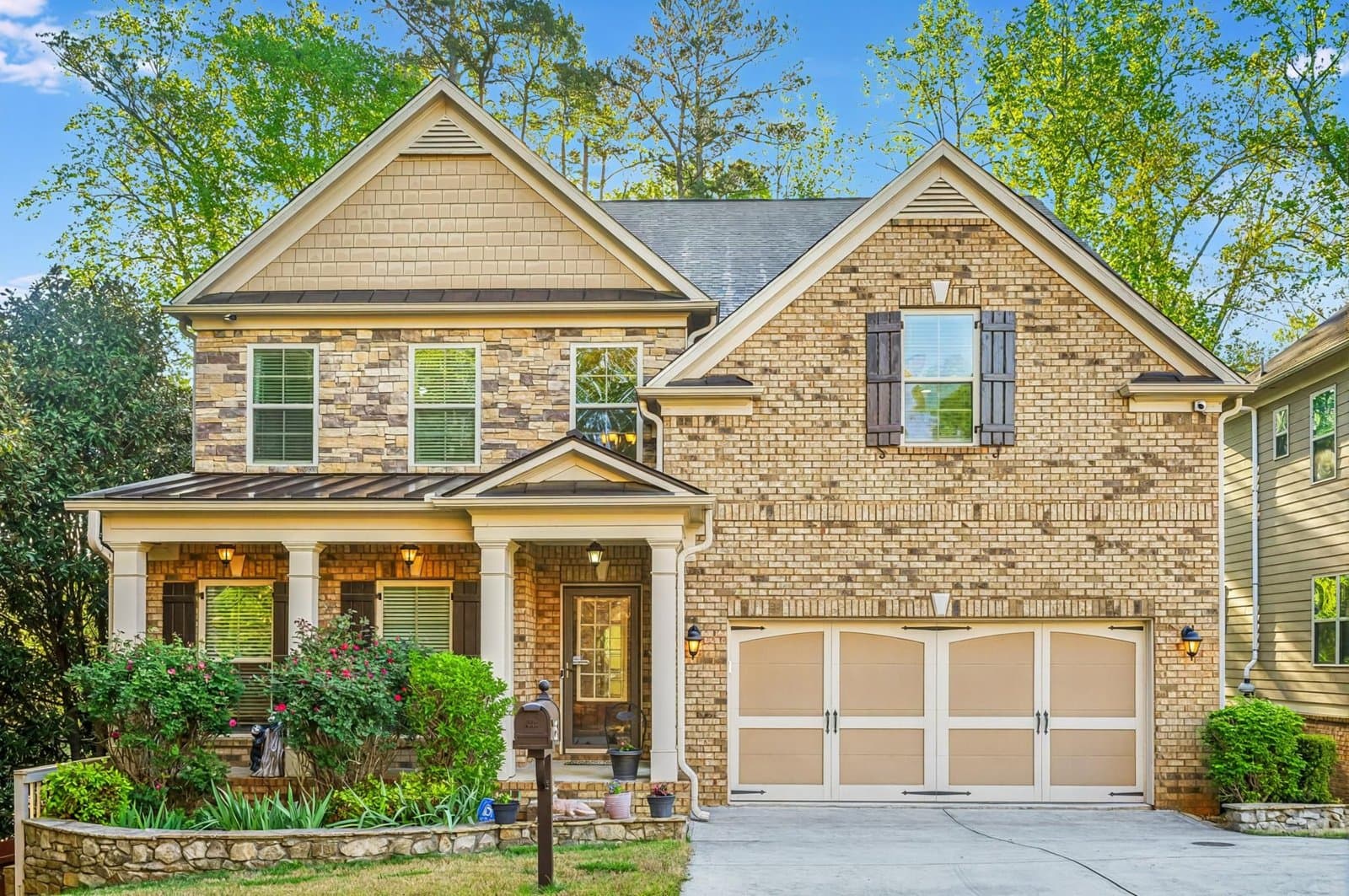

Atlanta's mild climate delivers eight functional outdoor months (twice what Northeast markets get), which means outdoor entertainment zones don't compete with kitchen renovations for buyer attention, they're additive. Buyers tour the inside first, fall in love outside. The MLS-listing photo of the pergola lounge with the fire pit is what gets the appointment, and a $74,000 full outdoor zone recoups ~80% at sale while qualifying the home for the next price tier of buyer.
What we're working with: the underused suburban backyard
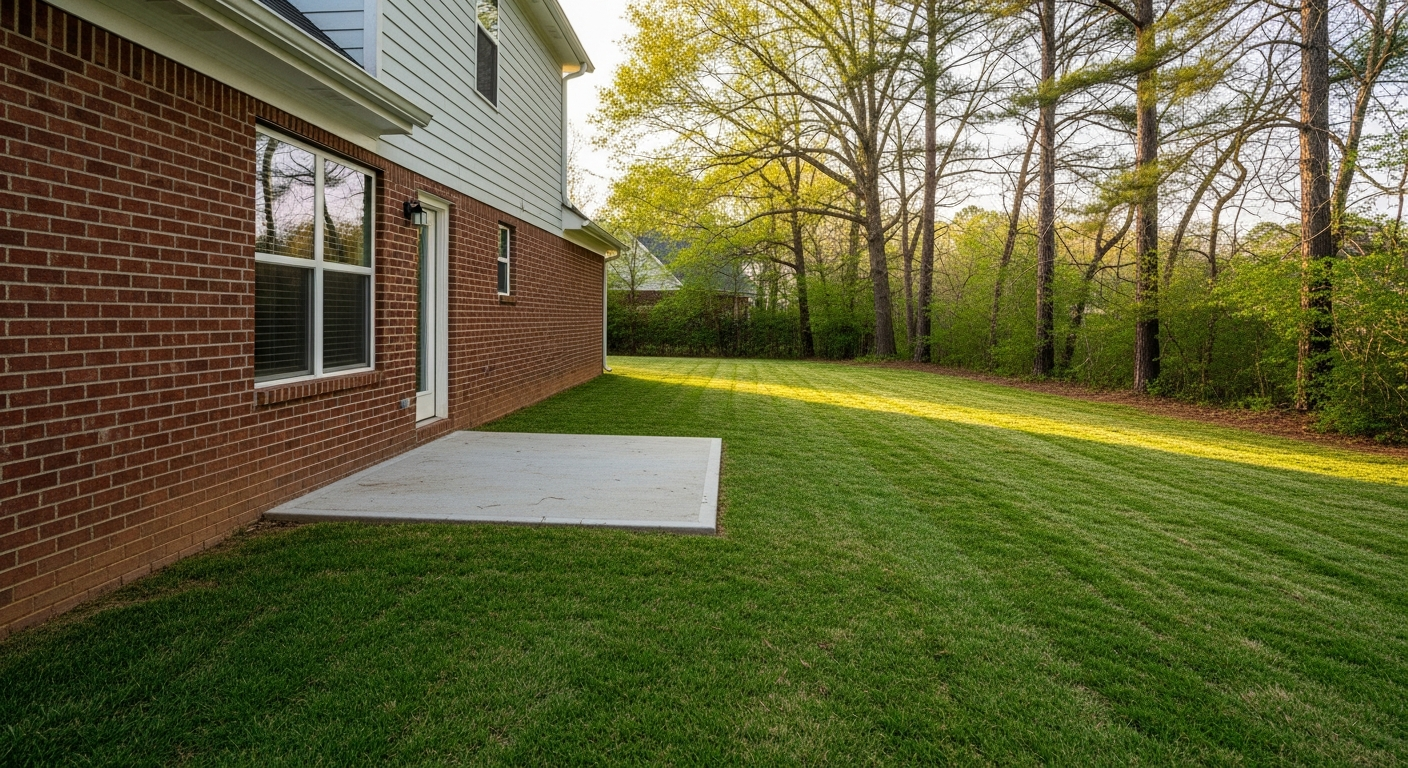
The typical 1990s suburban Atlanta backyard is 60 feet deep, fenced with pressure-treated wood or vinyl, anchored by mature oaks or pines along the perimeter, and completely blank in the center. There's a 12×12 wood deck off the kitchen door (sun-bleached boards, failing joist hangers, no railing code compliance) and 4,800 square feet of zoysia grass that gets mowed weekly and used twice a year. The fence line is structurally fine. The trees are valuable. The grade slopes away from the house at 2%: exactly what's needed for proper drainage. The blank center is the problem.
Buyers walk the inside, see the updated kitchen, check the primary suite, then step onto that deck and look out at… nothing. No reason to linger. No mental picture of weekend mornings with coffee or Saturday evenings with friends. The backyard reads as maintenance obligation, not lifestyle asset. In Atlanta's competitive spring market, that's the difference between an appointment that ends in an offer and an appointment that ends with 'we'll think about it.'
What's killing buyer interest isn't the fence or the trees or the layout. It's the absence of a defined outdoor living zone. The bones are fine. The merchandising is zero.
Style direction: Pergola Lounge with Outdoor Kitchen
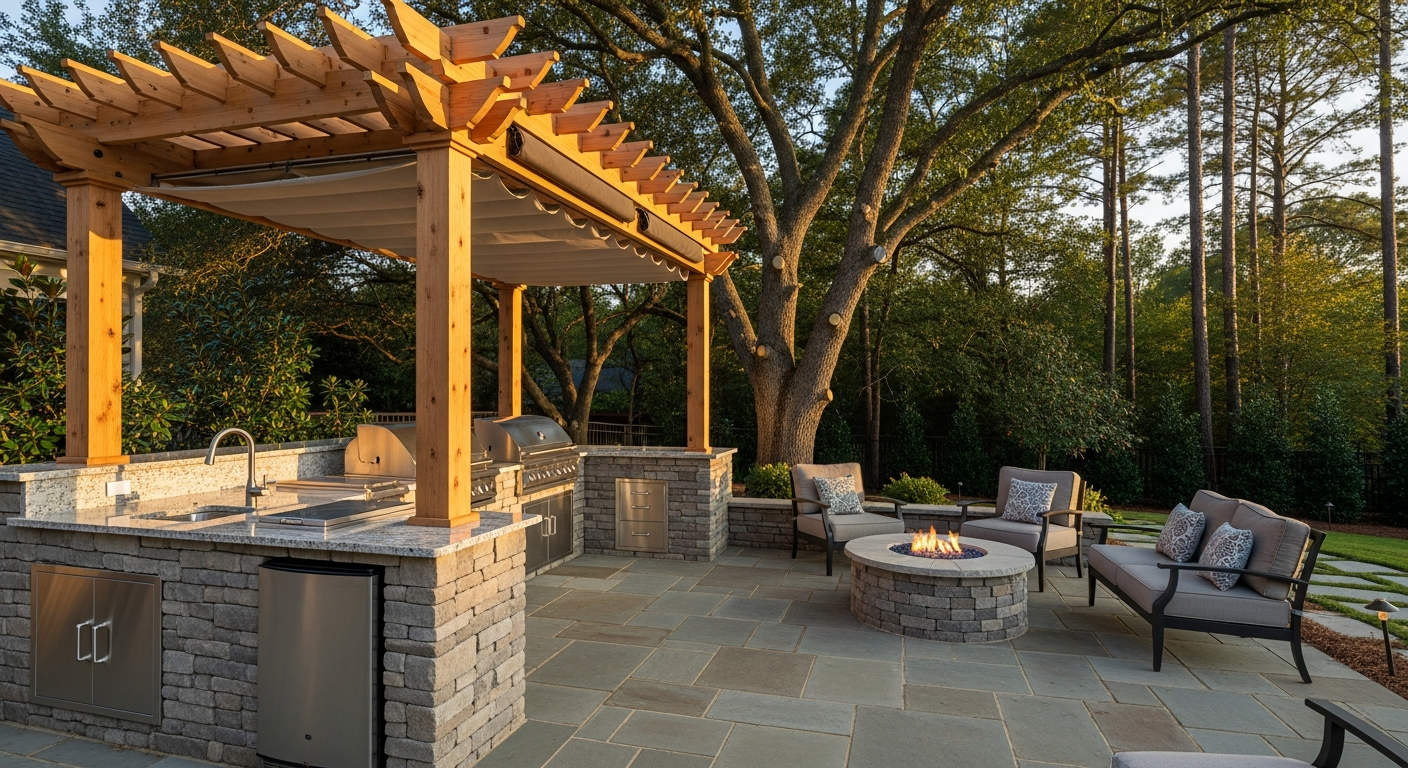
Beckett Real Estate's outdoor entertainment zone centers on a 12×16 cedar pergola with retractable canopy panels, anchored on concrete piers 18 inches below grade to avoid wood-to-soil contact. The pergola sits on a flagstone patio (Pennsylvania bluestone, mortar-set), extending to 24×16 total area, giving 384 square feet of usable hardscape. The built-in outdoor kitchen runs along one side: stainless steel grill with side burner, undermount sink with hot and cold water, mini-fridge on a dedicated 240V circuit, all set into a stone bar counter with granite top and storage cabinets below. A gas fire pit (stone-veneered, 48-inch diameter) centers the lounge area with a surrounding stone seat wall at 18-inch height for secondary seating.
Low-voltage landscape lighting layers in: twelve path lights along the walkway from the deck, eight uplights in the oaks to create canopy glow after dark, four step lights at grade transitions. Comfortable lounge seating with weatherproof cushions fills the pergola footprint. Gas line extends 50 feet from the main meter to feed both the grill and the fire pit. Electrical runs 240V for the fridge, low-voltage transformer for the lighting, and weatherproof outlets at each pergola post. The patio sits on a 4-inch crushed stone base with perimeter French drain to move water away from the house: non-negotiable in Atlanta clay soils where water doesn't percolate naturally.
Cost breakdown (Atlanta MSA, mid-2026)
| Line Item | Cost |
|---|---|
| Cedar pergola 12×16 with retractable canopy panels | $11,500 |
| Flagstone patio (24×16 = 384 sq ft, mortar-set) | $12,800 |
| Concrete base + French drain + grading for proper water flow away from house | $5,800 |
| Built-in outdoor kitchen: stainless grill + burner + sink + mini-fridge + granite bar | $14,500 |
| Stone-veneered gas fire pit + surrounding stone seat wall | $6,200 |
| Gas line extension (50 ft from main) + plumbing (water + drain to outdoor sink) | $5,400 |
| Electrical (240V for fridge, low-voltage transformer, outlets at each post) | $3,800 |
| Low-voltage landscape lighting (12 path + 8 uplights + 4 step lights) | $3,200 |
| Permit, backflow preventer install, inspections, contractor markup + contingency | $10,800 |
| TOTAL | $74,000 |
Beckett Real Estate's construction-eye notes
What to KEEP: the existing fence line (structurally sound, defines property boundary, no reason to replace), mature trees, especially the oaks along the back perimeter. Protect them with construction fencing during excavation. Root damage within the drip line kills the tree two years later, and a 40-year-old oak adds $8,000–$12,000 to property value in metro Atlanta. Keep the main electrical panel access path clear for new circuit runs. The panel is typically on the side of the house, and running 240V to the outdoor kitchen means pulling wire through the crawlspace or attic. Keep irrigation system valve locations mapped before patio excavation begins. Cutting a mainline during grading adds three days and $1,200 to the schedule.
What to GUT: nothing to demolish. This is greenfield construction. The discipline is in laying out the patio and pergola footprint to work WITH the existing yard's grade and drainage path, so water moves away from the house, not toward it. If the natural slope runs toward the foundation, the patio base needs regrading BEFORE stone goes down, and the perimeter French drain becomes non-negotiable. Skipping that drain when paving 384 square feet of hardscape means water pools against the foundation and shows up as basement seepage 18 months later, after the contractor's warranty expires.
What's the TRAP: building a gas fire pit too close to the wood deck or roof overhang. Atlanta code requires 10 feet minimum clearance from any combustible structure. Inspectors catch it, and moving a stone fire pit after mortar sets costs $4,500. Choosing wood pergola posts without base flashing OR concrete-pier mounting: wood-to-soil contact rots in five years in Atlanta's humidity, and the pergola leans by year six. Installing outdoor kitchen plumbing without a backflow preventer violates Atlanta backflow ordinances; the inspector red-tags it, and retrofitting a backflow device adds $850 and two weeks to the schedule. Not pulling permits for gas line extensions to a built-in grill: every Atlanta county requires one, and unpermitted gas work discovered during a pre-sale inspection kills deals or forces a $6,000 rework with permit penalties.
The other trap: underestimating how much usable season Atlanta's climate actually delivers. Outdoor zones get used March through October (eight months) versus four in Boston or Minneapolis. That's double the functional return, which is why outdoor entertainment zones don't compete with kitchen budgets in Atlanta; they're additive to the buyer's mental calculus. The kitchen gets them in the door. The pergola lounge with the fire pit gets them to make an offer.
Home value impact
Remodeling Magazine's 2024 Cost vs. Value Report for Atlanta MSA shows exterior mid-range remodels recouping approximately 80% at sale. A $74,000 outdoor entertainment zone investment returns roughly $59,200 in added home value at closing. The bigger win is qualifying the home for the next price tier of buyer (the household shopping at $525,000 instead of $485,000) because the outdoor zone delivers a lifestyle differentiator that comparable homes in the same subdivision lack. In Atlanta's spring market, that's the difference between 14 days on market and 47.
For an honest opinion and a realistic evaluation, contact Beckett Real Estate. Call Evan now: 866-578-8917 or schedule a free consultation.
Thinking about a move?
Beckett Real Estate works the whole of Metro Atlanta. Tell me the address or the neighborhood and I will tell you what the house is really like, what the inspection usually finds, and what the number should be.
What is my home worth?See a cash offerSell for more with conciergeTalk to an agent nowMore articles like this